

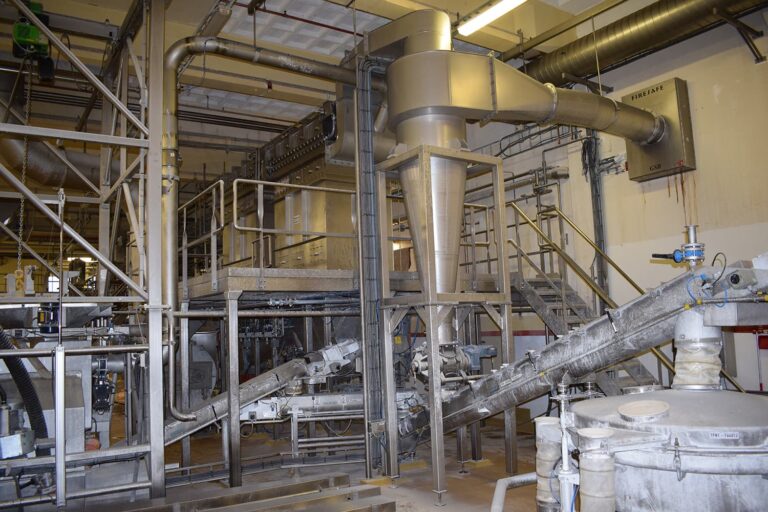
At the Foxhol site of potato processor Avebe, multiple grease types were used for bearings and electric motors, making lubrication management complex and prone to errors. In close cooperation with the maintenance department, all lubrication specifications were critically reviewed, resulting in the decision to standardise on a single grease: FoodCare® Polymer Grease. The outcome was significant: five different grease types were phased out, allowing the entire production facility to be lubricated with just one grease.
Text - light blue
Technically equivalent or even better
In many cases, alternative lubricants are available that are technically equivalent or even outperform existing products, while also delivering savings in time, consumption and costs. In addition to simplifying inventory management and administration, standardisation also offers technical advantages. For example, the service life of FoodCare® Polymer Grease is on average seven times longer, enabling lower lubrication frequencies and significantly reducing overall grease consumption.
The benefits of standardising on FoodCare® Polymer Grease:
- Fewer lubricants to keep in stock
- Reduced risk of errors or cross-contamination
- Longer service life and improved reliability
- Lower administrative workload
- Reduced maintenance and purchasing costs
Tekst 2 kolommen - wit
Two Polymer Greases for industrial and food-grade environments
To reduce the number of lubricating greases in use, high-performance polymer greases are applied, such as FoodCare® Polymer Grease for food-grade environments and Black Point Polymer Grease for industrial applications. These greases can replace multiple specified products with a single universal solution, making lubrication management simpler and more efficient.
Text with photo - white
A proliferation of lubricants is often the reality
Many production facilities experience a proliferation of lubricants over time. Machine manufacturers each specify their own greases and oils, often based on historical data and personal preferences. These products are typically used as the initial fill during machine delivery and then remain listed in manuals for years. At the same time, maintenance departments often follow their own lubrication practices. Due to warranty considerations and previous experiences, companies frequently continue using the originally specified lubricants recommended by the machine manufacturer.
The result is a large variety of lubricants within a single factory. This leads to higher inventory and purchasing costs, additional administrative workload due to numerous product and safety data sheets, and, most importantly, an increased risk of using the wrong lubricant. In practice, incorrect lubricant selection regularly results in component damage or unplanned downtime.
This project at Avebe Foxhol demonstrates that reducing the number of lubricants not only improves clarity and ease of use, for example by using a single grease gun for all lubrication points, but also directly contributes to higher productivity, lower costs and a more reliable production process.
Tekst - wit
Facing a similar challenge?
Are you dealing with short oil life, lubricant contamination or other lubrication-related challenges? Then it is worth taking a closer look at the situation.
With the right expertise and high-performance lubricants, you can reduce downtime, extend equipment life and improve process reliability. Feel free to contact us for tailored, well-founded advice. We are happy to help.

Tekst links met foto groot - blauw kader links